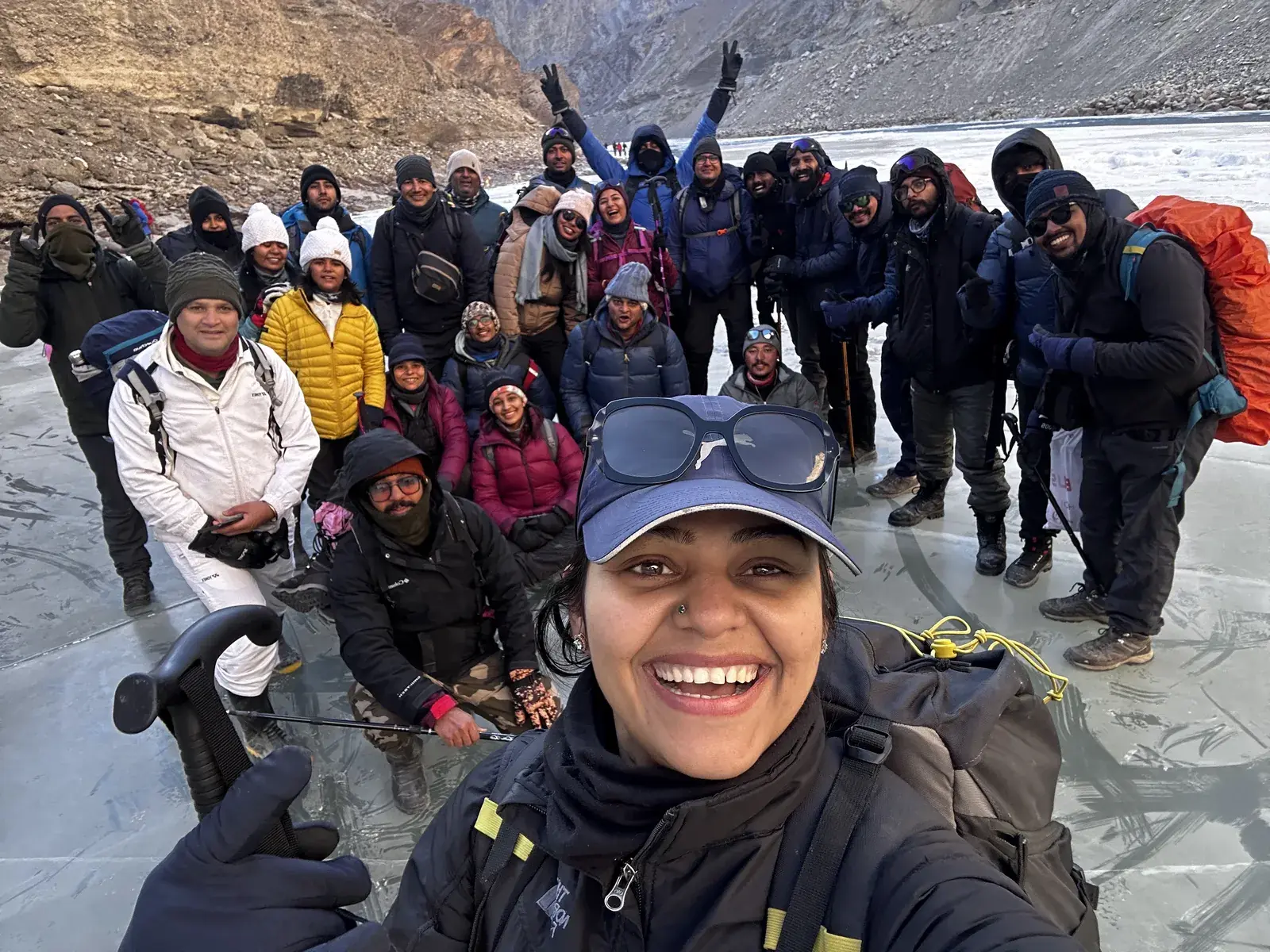
Deep in Ladakh, in the heart of winter, a whole river turns to stone. The Zanskar freezes from the top down until there is a sheet of ice strong enough to walk on. The local people have used it for generations to reach their villages — they call it the Chadar, the blanket. In the winter of 2024, at eleven years old, I walked across it too.
Everyone had warned me about one number before we left: minus 35. That is how cold it can get out there at night. I had felt cold before — on Everest Base Camp two years earlier the water had frozen overnight — but the Chadar is a different kind of cold. It does not visit you. It lives there.
From Everest's trail to a frozen river
By the time I stood at the start of the Chadar, I was not completely new to the mountains. Everest Base Camp at nine had taught my body what altitude felt like and taught my mind one important habit: never to say “ab nahi ho payega.” Never to decide in advance that I couldn't.
But the Chadar asks for something the regular trail does not. On a normal trek you trust the ground. Here, the ground is a river that is only sleeping. Every step is a small act of trust — you put your weight down and the ice holds, and you do it again, and again, for hours.
What minus 35 actually feels like
People always ask me this, so let me be honest about the small things, because the small things are the whole story up there:
- Water becomes a daily problem. Anything liquid wants to turn solid. You learn to keep your bottle close to your body, and you drink while you still can.
- The ice has a voice. As you walk, the Chadar shifts and settles under you with cracks and groans. The first time you hear it your heart jumps. After a while you understand it is just the river breathing, and you keep walking.
- You walk in layers, not clothes. Layer over layer over layer, until moving itself becomes work. Warmth out there is something you build, piece by piece, not something you simply have.
- Nights are the real test. The trekking is hard, but it is the still hours — sitting, waiting, sleeping in that cold — that ask the most of you.
The river teaches patience
The Chadar does not let you hurry. If you rush, you slip; if you panic at the cracking ice, you tire yourself out for nothing. So the whole trek becomes a lesson in staying calm — slow feet, steady breathing, eyes on the next stretch of white, not on the whole frozen valley ahead.
That is the strange gift of a place like this. It looks like it is testing your body, and it is. But really it is working on your mind — teaching an eleven-year-old how to be patient and unafraid in a place built to make you neither.
What the frozen river left with me
I came back from the Chadar warmer than I had any right to feel — not in temperature, but inside. I had walked across a river at minus 35 and it had held me, and I had held myself. After Everest Base Camp at nine and the Chadar at eleven would come Kang Yatse at nearly 20,000 feet, and back home, the barbell — the squats and deadlifts that people use to call me “Gujarat's Strongest Girl.”
Different arenas, same lesson, learned first on a sheet of ice: stay calm, trust your training, take the next step. The river will hold.